

The SAS Mission and Vision speak of inclusivity, opportunity, voice, empowerment, and the health and well-being of each individual in our community.
SAS strives to build a community of individuals and families from diverse socio-economic backgrounds, cultures, races, religions, and sexual orientations to prepare our students to live in and serve a diverse and multicultural society. Our goal is a truly inclusive school community that welcomes and supports all of its members. We believe that the work of inclusion is the responsibility of all members of our community.
At SAS, we interact with individuals, but we also interact with their cultures and their beliefs...There is no way we could possibly leave these interactions without being changed.
- ALUM Sophia Patterson, matriculated to Trinity University
An Inclusive Christian Community
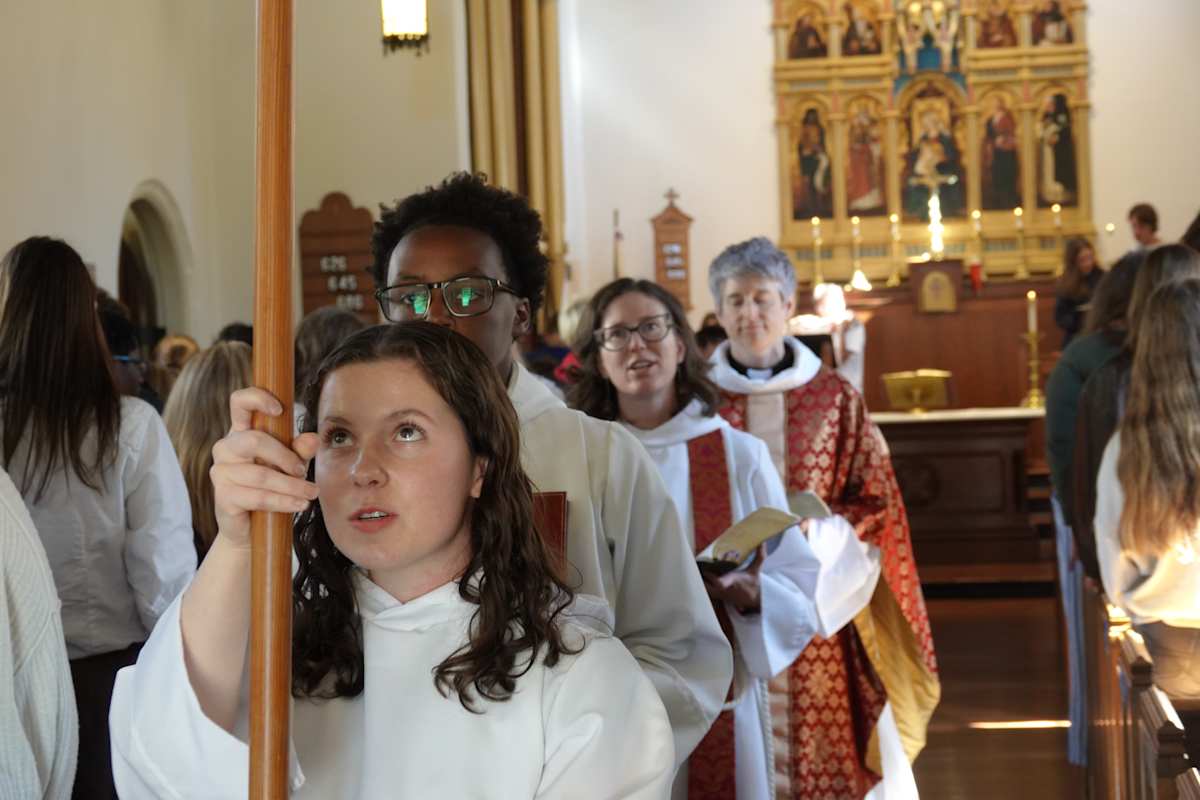
Since the beginning of our school’s history, our identity as an “inclusive Christian community” has remained central to our mission. We believe that inclusion is more than just the tolerance of difference. Rather, with the guidance of the Episcopal Church, the vibrant presence of differences in belief, gender, sexuality, faith tradition, race, and ethnicity allows our community to grow more fully into what Desmond Tutu called “God’s dream:” a community in which diversity is strength, where each child knows themselves as infinitely worthy and beloved of God, and where justice and forgiveness prevail over hatred and prejudice. As political divisions and systemic racism fray the bonds of our human family, we strive to make God’s dream a reality as an inclusive Christian community.
...we need not be paralyzed by our past or our present. We are not slaves to fate but people of faith. That work of racial reconciliation and justice – what we know as Becoming Beloved Community – is happening across our Episcopal Church...and it is work that belongs to all of us.
- The Most Rev. Michael Bruce Curry, former Bishop and Primate of The Episcopal Church
At SAS:
- Students represent a wide range of faith traditions. One-quarter of our students are Episcopalian.
- The overall school community is characterized by openness, trust, and forgiveness.
- The school chaplain, an Episcopal priest, is a full-time employee of the school and serves as pastor to the school community.
- Students and faculty attend regular chapel services in the 100-year-old St. Andrew's Chapel. An all-school Eucharist is celebrated on Wednesdays as a means of gathering and focusing the entire community each week. Music is an important part of our worship. Boarding students also attend a Compline service on Sunday evenings. As we are able, we will also provide transportation for students to additional worship services in the Episcopal church and/or other faith traditions.
- All seniors take a one-year course focusing on the religions in the Abrahamic traditions. The course culminates in each student writing a creedal statement addressing the student's ultimate concerns and beliefs.
- Senior Chapel Talks are opportunities for members of the senior class to offer the gifts of wisdom, truth, and encouragement to fellow students, faculty, and staff. Family, friends, and community members are encouraged to attend.
- With the help of our Chaplain, students may prepare for baptism or confirmation in the Episcopal Church.
At SAS, we are striving to make God’s dream a reality as an inclusive Christian community. We still have a lot of work to do, especially in the area of recruiting a faculty and Board of Trustees that better reflect the diversity of our student body. It is work to which we are committed.
- Karl j. Sjolund, Head of School

Special Events and Celebrations
All-school meetings, special events days, and Chapel provide additional opportunities for the SAS community to explore issues of equality and social justice. Our annual Martin Luther King, Jr. Day celebrations often include readings from students of color as well as teach-ins presented by faculty and alumni on “Folklore and the Harlem Renaissance," “Compiling and Mapping Tennessee’s Lynching History,” "MLK and Malcolm X: Changing Perspectives on Race, Violence, and Islam,” "Music and Race: The Legacy of Billie Holiday’s ‘Strange Fruit,’ ” and "A History of Racial Passing in America."
Just wanted to say how impressed I was with the MLK celebration. As native Atlantans, we hold King’s legacy in the highest esteem, and we are glad to see the intellectual and creative sophistication with which this celebration has engaged his legacy.
- Dr. Al-yasha Williams, former parent and Spelman College Professor of Philosophy and Religious Studies
Advanced Biology
The Immortal Life of Henrietta Lacks by Rebecca Skloot
African American Literature
Jubilee by Margaret Walker
Passing by Nella Larsen
Their Eyes Were Watching God by Zora Neale Hurston
A Lesson Before Dying by Ernest Gaines
Ancient and Medieval Literature and Philosophy
Inanna
The Popol Vuh
The Ramayana
Tao Te Ching by Lao Tzu
The Pillow Book by Sei Shonagan
Contemporary British Literature
The Remains of the Day by Kazuo Ishiguro
Changing My Mind by Zadie Smith
Contemporary Modern Novel
Beloved by Toni Morrison
The Underground Railroad by Colson Whitehead
Global Literature
A Thousand Splendid Suns by Khalid Hosseini
Washington Black by Esi Edugyan
Othello by William Shakespeare
Grade 7 Advisory
Harbor Me by Jaqueline Woodson
Seedfolks by Paul Fleischman
Humanities 6
Kiss the Dust by Elizabeth Laird
Humanities 7
Same Sun Here by Silas House and Neela Vaswani
The Slave Dancer by Paula Fox
Lyddie by Katherine Paterson.
Humanities 8
Piecing Me Together, Renee Watson They Called Us Enemy, George Takei For Every One, Jason Reynolds
History 10
Things Fall Apart by Chinua Achebe
Persepolis by Marjane Satrapi
Literary Studies
A Raisin in the Sun by Lorraine Hansberry
Madness in Literature
A Streetcar Named Desire by Tennessee Williams
Freshwater by Akwaeke Emezi
Modern and Contemporary Literature and Philosophy
The Hours by Michael Cunningham
Ceremony by Leslie Marmon Silko
The History of Love by Nicole Krauss
Place-Based American Studies
Ely: An Autobiography by Ely Green
U.S. History
March by John Lewis